Inside Our 2026 Sperm Whale Season in Dominica: A Day-by-Day Field Report
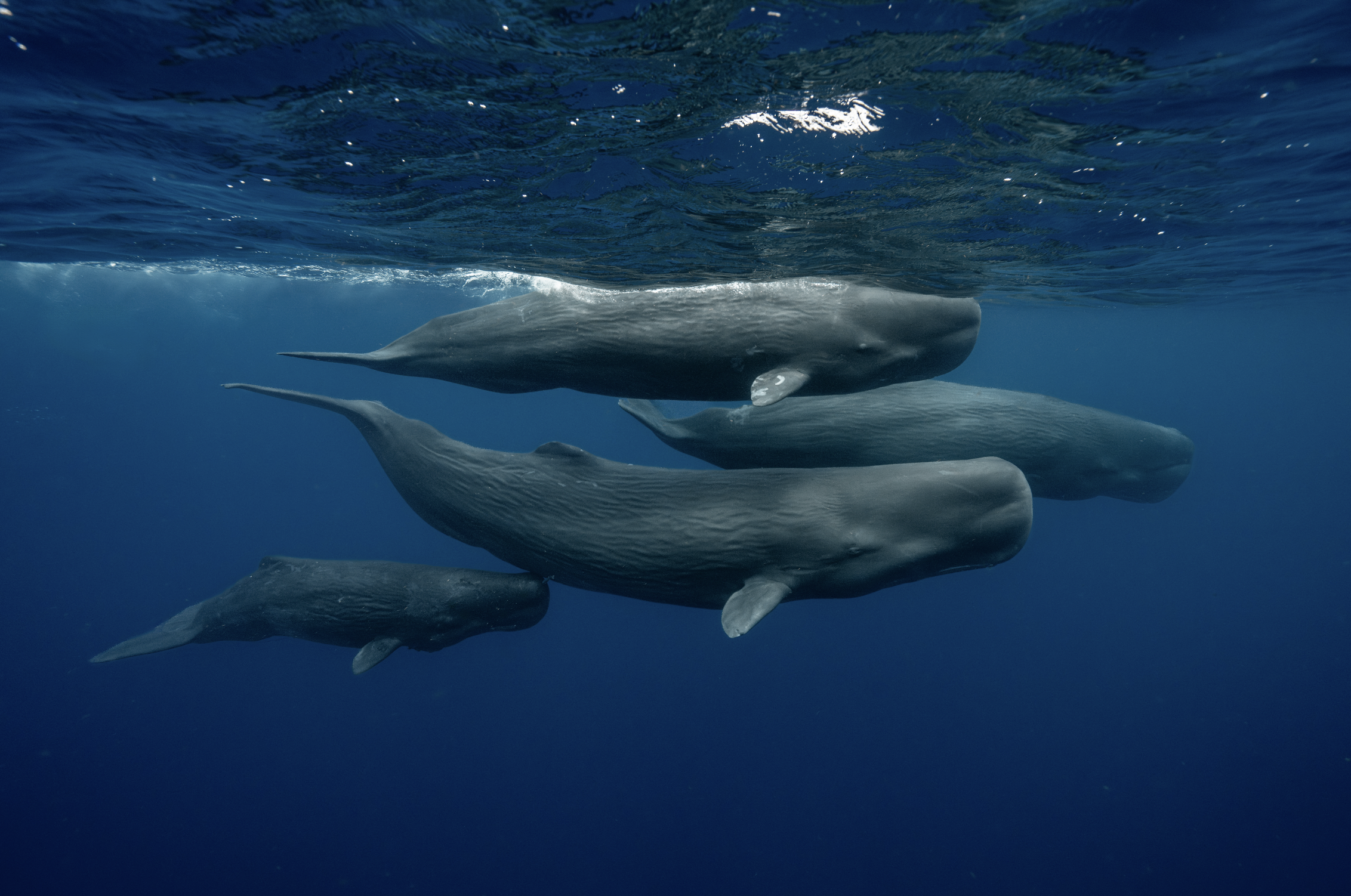
2026 Dominica Sperm Whale Field Notes
Many operators do not publish a day-by-day record of what actually happened on the water during a season. We do, partly because we think it is the most honest thing a serious operator can put in front of prospective guests, and partly because the long-term record matters for the science and the policy that protects this population.
This is our season report for the 2026 sperm whale season in Dominica. It covers thirty-one operating days across our March and late-April trip windows, the family units we encountered (some of them named, some of them tracked across decades), the rarer events that punctuated the season, and the days when nothing happened at all.
If you are reading this because you are deciding whether to book a Dominica expedition, this is the most useful document we can give you. The numbers below are not a sales pitch. They are what the water actually delivered, day after day, on the boat we run with the crew we run it with.
The Season at a Glance
Across thirty guest operating days inside six 5-day sessions in March and late April 2026, we encountered sperm whales on twenty-six of them. Four days produced no sperm whale contact at all. The headline numbers from the season are below.
Guest sessions: 6 (four in March, two in late April), each one-week long
Total boat operating days: 30
Days with sperm whale encounters (in water): 26 (≈87%)
Days with no sperm whale / cetacean contact: 4 ("nothing" days)
Days with humpback whales alongside sperm whales: 1 (March 4)
Sleeping sperm whales: observed3 times (Unit A twice on March 4, Unit J on April 29)
Socializing sperm whales / coda clicks: observed on 4 days
Days with “Chaos” the juvenile: 4 days
Days with mature bull (male) sperm whale encounters: 2 (March 12, March 20)
Distinct identified resident family units encountered: at least 6 (A1/A2, J, N, V, the Group of Seven / Unit F, and Unit U)
Days with transient (non-resident) sperm whales: 5
Other cetacean species observed: Fraser’s dolphins, Atlantic spotted dolphins, common dolphins, melon headed whales, pilot whales, pygmy killer whales, and humpback whales.
87% sperm whale contact across our guest operating days is considered above average (which is closer to 60%) with what a year-round resident population off Dominica's leeward coast typically delivers. 2026 was, overall, a very strong season for us in Dominica.
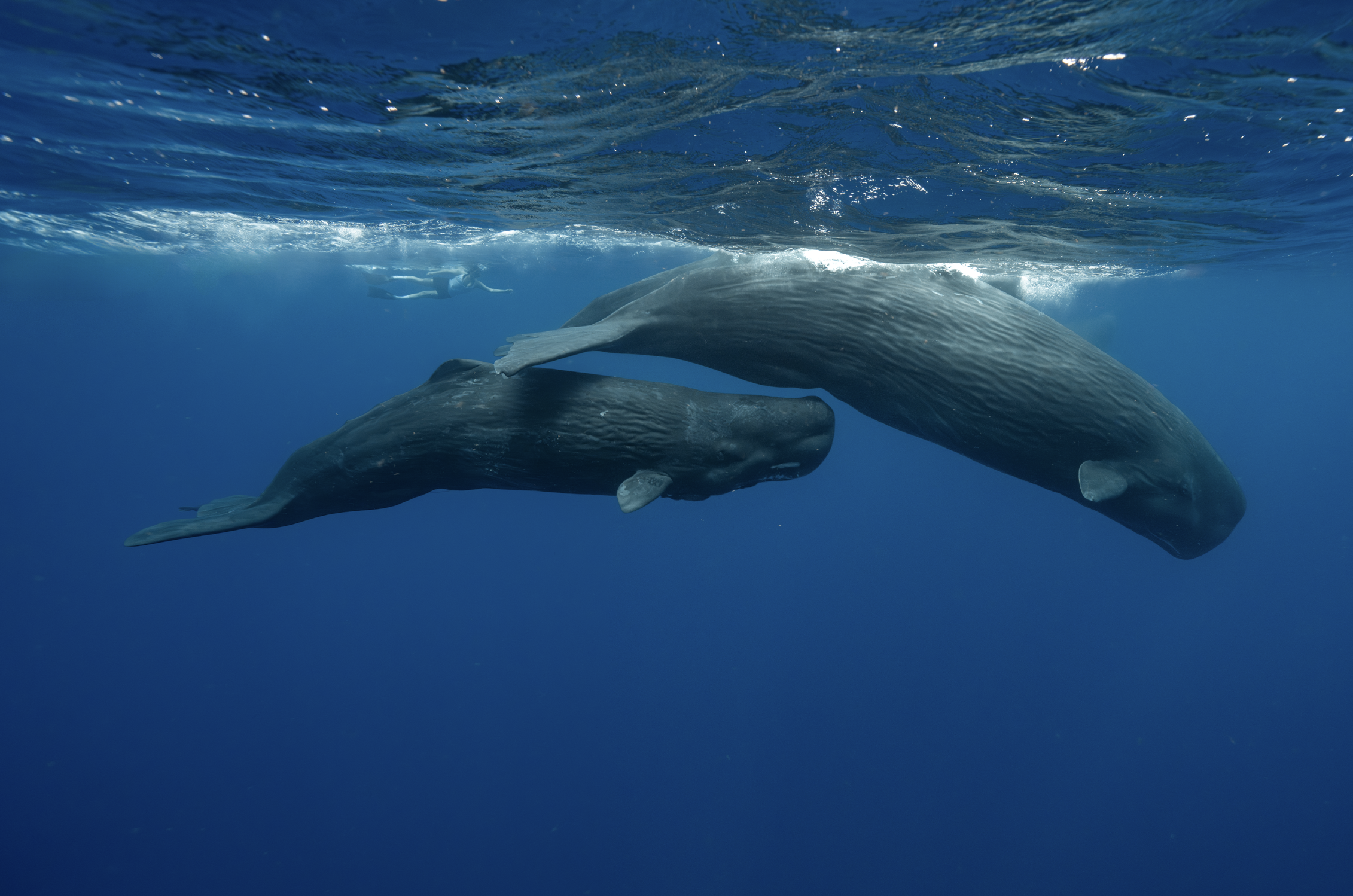
Our 2026 Sessions, Week by Week
The 2026 calendar broke into six guest sessions of five days, one land day, and two transit days each. Sessions 1 through 4 ran across March, with short turnover and positioning days between them, an sessions 5 and 6 ran from mid to late April. Each session below is the actual day-by-day record from that group's week on the water, for the guests who happened to be on those particular trips.
Session 1: March 3–7, Unit A and an Opening Humpback
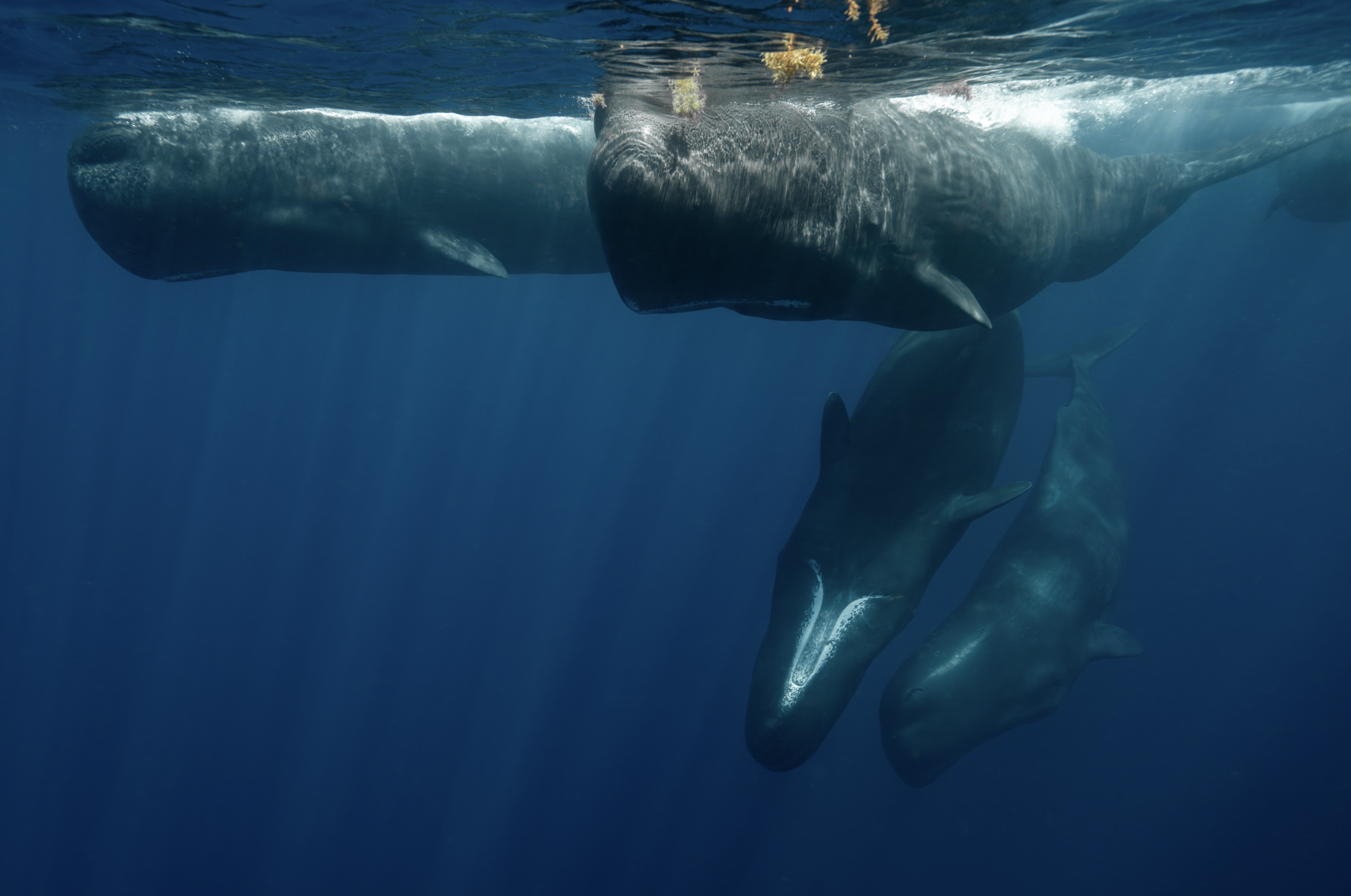
The season opened with resident Unit A on March 3 and again on March 4, the same A unit that is one of the larger and more swimmer-tolerant residents in Dominica's waters. The two A unit days produced two distinct behavioural states in 48 hours: a sleeping encounter (sperm whales rest in vertical "logs" near the surface, and a sleeping unit observed under the reserve's one-group-at-a-time rule is one of the rarest in-water windows the rules allow) and active socialising.
March 4 also brought the season's first headline rarity: a migrating humpback whale logged in the same area as Unit A, an uncommon co-occurrence that you do not see most years. March 5 and 6 were both blank "nothing" days, and Session 1 closed on March 7 with another resident sperm whale encounter, this time with unit J
Session 2: March 8–12, Transients into Unit N, Chaos, and the First In-Water Bull
Session 2 was the session that announced the season had teeth. March 8 brought another unidentified resident encounter, followed by transient sperm whales moving through on March 9 and March 10. Unit N arrived on March 11 and stayed for March 12, and from the moment Unit N was located the trip changed character.
Unit N is one of the larger and more swimmer-tolerant residents in Dominica, and the unit hosts two calves we have come to know well across 2026: Chaos and Havoc. Chaos in particular has shown the kind of curious, human-seeking behaviour that only a small handful of individual animals demonstrate across decades of the population's record. Every Unit N day in 2026 was wild, and most of that wildness was Chaos approaching, circling, and orienting on swimmers in the water.
Then on March 12, Unit N was joined by a mature bull sperm whale, and our guests went into the water with him. In-water encounters with mature male sperm whales are rare events. The bulls are typically more wary of boats and swimmers than the resident family units they visit, and most operators go entire seasons without putting guests in the water with one. Doing it on the closing day of Session 2, alongside Unit N and a curious calf, was a triple-stack day that the rest of the season had to chase.
Session 3: March 15–19, A Slow Open, Residents, and Unit J Arrives
Session 3 opened slowly. March 15 was a blank "nothing" day, the third of the season. From March 16 the rhythm picked up: residents were located on March 16, 17, and 18, the unit identifications not always logged but the contact consistent. March 19 brought resident Unit J into the season for the first time. Unit J is the third of the larger, swimmer-tolerant resident units, and the J encounter on March 19 set up what would turn into the strongest stretch of the entire month.
Session 4: March 20–24, The J Block, the Second Bull, and Chaos Returns
Session 4 was, by most measures, the strongest March session of 2026. Unit J carried March 19 through 21 across the session boundary, with a three-day block of consistently strong in-water encounters with the same unit. March 20 produced the second in-water mature bull encounter of the season, with a male joining Unit J and our guests in the water for the second time in eight days. Two confirmed in-water bulls in a single month, both alongside identified resident units (N on March 12 and J on March 20), is a season-defining run that does not come along every year.
Unit N then returned on March 22 and 23, with Chaos still front and centre, the same calf-led wildness that had defined Session 2. The session closed on March 24 with a transient unit, and the March trip window came to an end.
Session 5: April 20–24, The Group of Seven Opener and Unit V
The April trip window opened with the encounter every long-time observer of this population watches for: the Group of Seven, now tracked as Unit F. The Group of Seven is the most-studied sperm whale unit on the planet, with continuous research data dating to 1995 and current surviving members Fingers, Pinchy, and Digit. Unit F is smaller than the big-three swimmer-tolerant residents (A, J, and N), and the encounters feel different in the water (closer to a quiet, careful observation than the more interactive feel of a Unit N day with Chaos), but the historical and scientific weight of any F encounter is hard to overstate. To find them on day one of an April trip window was the kind of opening day that resets the energy on the boat.
April 21 was a blank "nothing" day, the fourth and final of the season. April 22 and 23 produced consecutive encounters with Unit V, one of the smaller resident family units catalogued by the Dominica Sperm Whale Project. Session 5 closed on April 24 with Unit J, the same J unit that had carried March, returning to the water for the start of the late-April J chapter.
Session 6: April 26–30, F+U, the Unit J Sleep, and Chaos to Close
Session 6 began with a transient unit on April 26 and turned into the day of the season on April 27. We logged a second Group of Seven (Unit F) encounter on the same day as Unit U, the long-running affiliated family unit that Unit F has travelled with for almost twenty years, with dolphins and a pod of melon-headed whales in the same area. The pairing of F and U is one of the most-documented cross-unit affiliations in the sperm whale literature, with observations of the two units travelling together, socialising together, and even cross-fostering each other's offspring going back to at least 2008. To find them together, with two additional cetacean species in the same window, is the kind of day that does not get repeated.
April 28 brought Unit J back, and April 29 produced one of the most quietly spectacular moments of the late-April window: Unit J slept. Sperm whales rest in vertical "logs" at the surface, often in tight family groups, and a sleeping unit observed within the rules (one group at a time, encounter ends the moment the whale wakes) is one of the rarest in-water behavioural states a guest can witness. The April 29 in-water Unit J sleep closed our J unit chapter for 2026 on a remarkable note.
Unit N then closed the entire season on April 30 with Havoc and his mother observed for several hours.
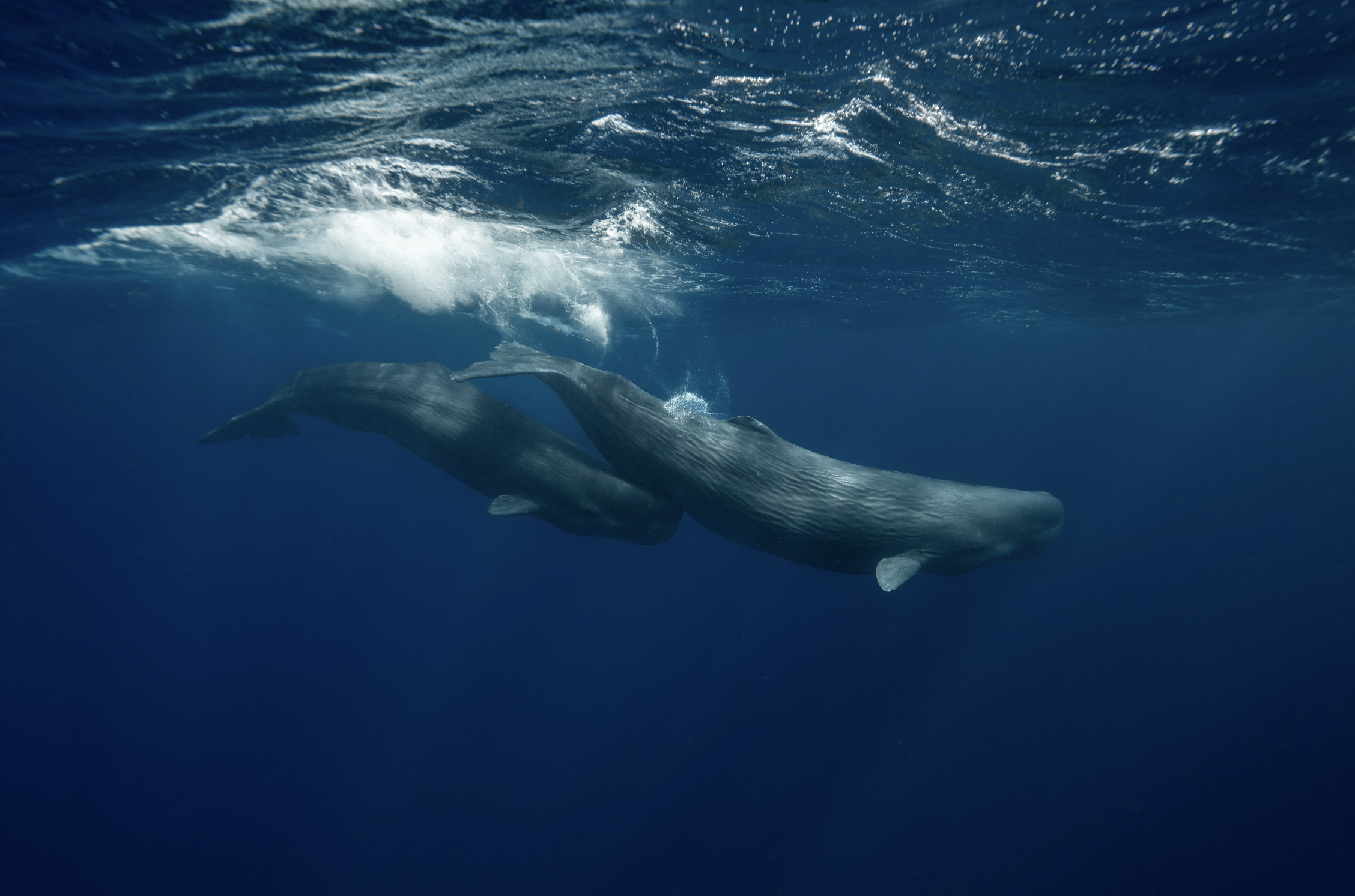
The Family Units We Encountered
Beyond the day-by-day record, the 2026 season produced consistent contact with at least six identified resident family units, plus several unidentified resident encounters and a handful of transient observations. Not all units are equal in the water. Among the resident units we encountered this year, Units N, A, and J are the most behaviourally accessible: they are larger animals, they have been around tourism and research vessels for years, and they are markedly more tolerant of swimmers than the smaller units. The Group of Seven (Unit F) and its affiliated Unit U are extraordinary scientifically (the F+U pairing is one of the most-studied cross-unit relationships in the species), but the animals are smaller in size and the encounters with them feel different in the water than the big-three resident days. A short profile of each unit, with the in-water character we observed across 2026, follows.
Unit N (the Chaos and Havoc unit)
If we had to pick a single unit that defined the 2026 season experientially, it would be Unit N. Encountered on March 11, 12, 22, 23, and again to close the entire season on April 30, Unit N is one of the larger and more swimmer-tolerant resident units, and it hosts two calves we have come to know well across this year: Chaos and Havoc. Chaos in particular has shown the kind of curious, human-seeking behaviour that you only see from a small handful of individual animals across decades of the Dominica record. Every Unit N day in 2026 was wild, and most of that wildness was Chaos approaching, circling, and orienting on swimmers in the water. The unit also hosted the season's first in-water mature bull encounter, on March 12, layering a rare male visit on top of an already remarkable calf-led day.
Unit J
The most-encountered identified unit of the 2026 season, with confirmed appearances on March 19, 20, 21, April 24, 28, and 29. Unit J is another of the larger, more swimmer-tolerant resident units, and the J days were consistently among the most enjoyable in-water encounters of the year. The unit hosted the second in-water mature bull encounter of the season on March 20, and on April 29 we logged Unit J asleep at the surface, one of the rarest and most photographically distinctive behavioural states a guest can witness, observed under the reserve's strict one-group-at-a-time sleep rules.
Unit A (A1 and A2)
Encountered on March 3 and March 4, with the March 4 day producing the unusual humpback co-occurrence. Unit A is the third of the larger, swimmer-tolerant resident units, and the two-day A block at the very start of the season delivered both sleeping and active socialising encounters, two distinct behavioural states inside a 48-hour window. The unit was not subsequently logged in our documented sessions, but it set the bar for how the rest of the season would feel in the water with the larger residents.
Unit V
Encountered on April 22 and 23, two consecutive days of contact with the same unit. Unit V is one of the smaller resident family units catalogued by the Dominica Sperm Whale Project.
The Group of Seven (Unit F)
Two encounters in the April trip window, on April 20 and April 27. The most-studied sperm whale unit in the world, with continuous research data dating to 1995 and current surviving members Fingers, Pinchy, and Digit. F is smaller in size than the big-three swimmer-tolerant residents, and the encounters feel different in the water (closer to a quiet, careful observation than the more interactive feel of a Unit N day with Chaos), but the historical and scientific weight of any F encounter is hard to overstate. The April 27 day additionally included Unit U (their long-running affiliate, below), dolphins, and a pod of melon-headed whales, making it the most species-rich and behaviourally significant single day of the year.
Unit U
Encountered on April 27, on the same day as the Group of Seven. Unit U is one of the resident Eastern Caribbean family units catalogued by the Dominica Sperm Whale Project, and is best known for its long-standing close affiliation with Unit F. The two units have been documented travelling together, socialising together, and even cross-fostering each other's offspring across observations going back to at least 2008. Like F, U is smaller in size than the big-three residents, and the value of a U encounter is principally relational: it is what U represents alongside F that makes a day with both of them feel like one of the most meaningful days in the population's record.
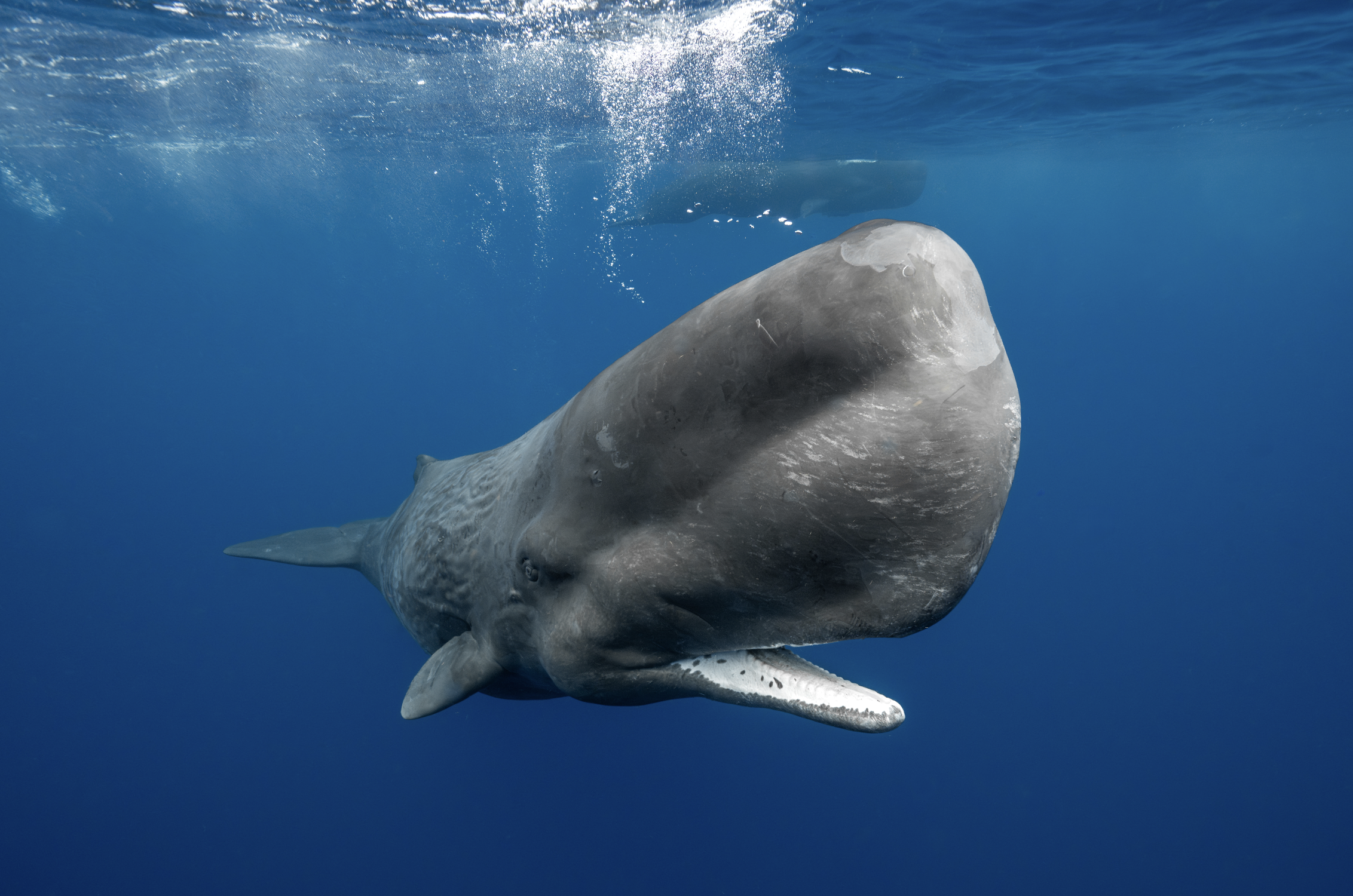
The Standout Encounters
Six storylines in the 2026 season stood out from the normal rhythm of resident encounters.
Chaos and the Unit N run. Across every Unit N day of the 2026 season (March 11, 12, 22, 23, and the season-closing day of April 30) the calf Chaos approached, circled, and oriented on swimmers in the water in a way that only a small handful of individual sperm whales in the population's recorded history have ever demonstrated. Havoc, the unit's other calf, was usually nearby. Calves like Chaos are how Dominica's reputation for in-water encounters was built in the first place: a single curious, swimmer-tolerant young whale can define a season for the guests who happen to be on those particular trips.
March 3–4, Sleeping and socialising with Unit A. The opening A unit days produced two distinct behavioural states inside 48 hours: a sleeping encounter (one of the rarest in-water windows under the reserve's rules, observed one group at a time and ended the moment the whale wakes) and active socialising. To get both behaviours from the same unit on consecutive days is a generous opener for any season.
March 4, Humpback alongside Unit A. A migrating humpback whale was logged in the same area as resident sperm whale Unit A. Humpback sightings off Dominica are seasonal (mostly winter migration), and the simultaneous presence of a resident sperm whale unit and a migratory humpback in the same window is uncommon enough to be worth recording specifically.
March 12, In-water mature bull with Unit N (and Chaos). The first of two in-water mature bull sperm whale encounters of the season, on a day that already featured Unit N and Chaos's full attention. Bulls return to Caribbean waters only briefly and only seasonally to mate, with December through March the peak window. Putting guests in the water with a mature bull is rarer still: bulls tend to be more wary of boats and swimmers than the resident family units they visit, and most operators go entire seasons without a confirmed in-water bull moment. Doing it alongside Unit N and a curious calf made it a triple-stack day.
March 20, In-water mature bull with Unit J. The second in-water bull encounter of the season, eight days after the first, this time alongside Unit J. Two confirmed in-water bull moments in a single month, both alongside identified resident units, is a strong indicator of an active breeding window in the population this year and an exceptional run of timing for the trips that hosted them.
April 27, Unit F and Unit U together, with dolphins and melon-headed whales. The single most layered day of the season. A second encounter with the Group of Seven (Unit F), the most-studied sperm whale unit in the world, on the same day as Unit U, the affiliated family unit that F has travelled and cross-fostered with for almost two decades. Add to that a pod of dolphins and a pod of melon-headed whales in the same area, and you have a day that combines one of the most scientifically significant cross-unit pairings in the species with a multi-species cetacean window. Days like that one are not normal in Dominica or anywhere else.
April 29, Unit J asleep at the surface. Sperm whales rest in vertical "logs" near the surface in tight family groups, and a sleeping unit is one of the most behaviourally vulnerable states for the species. Under the reserve's rules, sleeping whales may be observed by only one group at a time, and the encounter ends the moment the whale wakes. Logging an in-water sleep day with Unit J in late April is a quiet, photographically unique window most travellers never see, and it closed our J unit chapter for 2026 on a remarkable note.
The "Nothing" Days
Four days across the 2026 guest sessions produced no sperm whale contact at all: March 5, 6, and 15, plus April 21. We log them honestly and we discuss them with guests on the boat. There are several reasons a day produces no whales. The resident units sometimes range further afield to follow shifting squid distribution. Weather can compress visibility and acoustic detection range. The whales themselves can be on a foraging cycle that keeps them deep and distant for the duration of a search day. None of this is an operator failure; it is the structure of the work.
This is one of the reasons we run the activity as a week-long expedition rather than as a day excursion. A single day, even on a permitted operator's boat with a competent crew, can deliver nothing. A week of days, run with patience and acoustic discipline, almost always delivers something. The 2026 season's 87% sperm whale contact rate across our guest operating days reflects exactly that pattern.
What This Data Says About the 2026 Season
Four things stand out from the season as a whole. First, the resident population was active and identifiable through both trip windows, with at least six named family units encountered and Unit F (the Group of Seven) appearing twice in eight days in late April, including the rare F-and-U day on April 27. The long-term study population is still findable, still reading the boat, and still recognisable individual by individual.
Second, the in-water character of the season was carried by the bigger swimmer-tolerant residents (A, J, and N) rather than by F and U. The smaller F and U units carry a different kind of weight in the data and in the literature, but the days that defined how the 2026 season felt in the water (Chaos circling swimmers across every Unit N day, the J unit block in late March, Unit A alternating between sleeping and socialising at the start of the season) all came from the larger residents. Anyone planning a 2027 trip should understand that distinction.
Third, the male breeding visit window was visibly and unusually accessible. Two confirmed in-water mature bull encounters in March, both alongside identified resident units, is the kind of run that does not come along every year. Most operators go entire seasons without putting guests in the water with a mature bull. We had two such days in a single month, with N and J units respectively. That is a season-defining feature for the trips that hosted them.
Fourth, the rhythm of "nothing" days, productive sessions, and standout encounters is exactly what an honest expedition report should look like. The resident sperm whales of Dominica are not a guaranteed photograph. They are a real population, with their own daily lives, in waters that operators move respectfully through under permit.
We also got extremely lucky, as the 2026 season also produced some of the longest extended sperm whale absences seen in Dominican waters. With long stretches of no sightings in mid to late February and early April. Our trips were not operating during those time periods, but we know from various captains that many days produced no whale encounters at all for many days in a row, despite being peak calving season, which tends to bring a higher population of both resident and transient whales to Dominica. The reasons for this are not fully known, but the more defined presence of nuisance predators such as pilot whales and orca may explain why the whales left for extended periods of time.
The 2026 season delivered the kind of mix that makes this trip what it is: long stretches of competent residential contact, a few quiet days, and a small number of genuinely remarkable moments (the Chaos run across Unit N days, two in-water bulls in March, a humpback alongside Unit A, an in-water Unit J sleep on April 29, and the April 27 day with Unit F and Unit U together, dolphins, and melon-headed whales) that none of the guests on those particular sessions will forget.
If you are interested in joining a 2027 expedition, our Dominica trip details page covers the booking process, the trip structure, and the lead time required. Our deeper guides on Dominica's sperm whale sanctuary, the rules of the reserve, and the science of the resident family units cover the broader picture this season report sits inside.
Frequently Asked Questions
What was the sperm whale sighting rate on One with Whales expeditions in 2026?
Across thirty guest operating days inside six 5-day on-water sessions in March and late April 2026, sperm whales were encountered on twenty-six of them, or roughly 87% of days on the water. Four days produced no sperm whale contact at all.
Which sperm whale family units were seen during the 2026 season?
At least six resident family units were identified across the 2026 sessions: Unit A (and A1), Unit J, Unit N, Unit V, the Group of Seven (Unit F), and Unit U. Several additional resident sightings were logged without specific unit identification, and five days produced transient (non-resident) sperm whales.
Were male sperm whales seen in Dominica in 2026?
Yes, and remarkably so. Two in-water mature bull sperm whale encounters were confirmed during the March 2026 trip window, on March 12 (alongside resident Unit N) and March 20 (alongside resident Unit J). Both fall inside the December-to-March peak window for male breeding visits to Caribbean waters. In-water encounters with mature bulls are rare; most operators go entire seasons without one.
Did you encounter the Group of Seven (Unit F) in 2026?
Yes. The Group of Seven, now tracked as Unit F, was encountered twice during the late April trip window, on April 20 and April 27. The unit's three surviving members are Fingers, Pinchy, and Digit. The April 27 encounter additionally included Unit U (Unit F's long-running affiliated unit, with whom F has been documented travelling and cross-fostering offspring for almost two decades), alongside dolphins and a pod of melon-headed whales, making it the most behaviourally significant and species-rich day of the season.
Who are Chaos and Havoc?
Chaos and Havoc are two calves in resident Unit N. Chaos in particular has shown the kind of curious, human-seeking behaviour that only a small handful of individual sperm whales in the Dominica record have ever demonstrated. Across every Unit N day of the 2026 season (March 11, 12, 22, 23, and April 30), Chaos approached, circled, and oriented on swimmers in the water, and made every Unit N encounter of the year unforgettable for the guests on those trips.
Which units are best to be in the water with?
In our 2026 experience, Units N, A, and J are the most behaviourally accessible in-water resident units. They are larger units and markedly more swimmer-tolerant than the many other units. Unit F (the Group of Seven) and its affiliated Unit U are scientifically extraordinary (with one of the most-documented cross-unit affiliations in the species), but the animals are fewer and the encounters feel different in the water. Both kinds of day are worth having; they are simply different experiences.
How many days had no sperm whale contact in 2026?
Four of our operating days across the 2026 sessions produced no sperm whale contact at all (March 5, 6, and 15, plus April 21). The resident sperm whales range across the Lesser Antilles and are not always in immediate Dominica waters, which is one of the reasons the activity is structured as a week-long expedition rather than as a day trip.