Rurutu 2026: A Season of Contrasts (season report)
Our annual humpback whale season report from the Austral Islands, French Polynesia
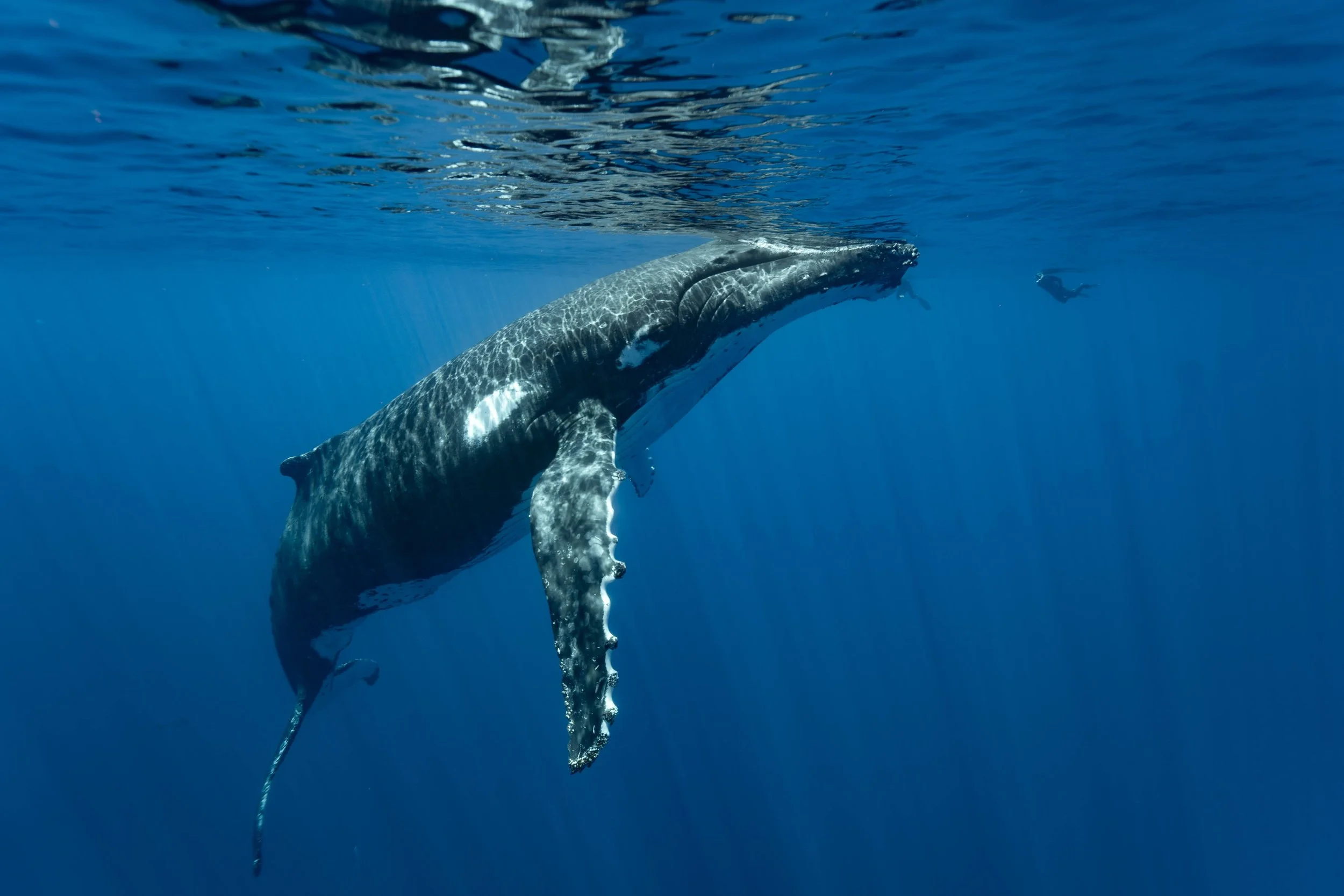
Every year, between August and October, humpback whales migrate into the warm waters of French Polynesia to breed, give birth, and raise their young. For us at One With Whales, this annual migration means returning to Rurutu, a small, remote island in the Austral archipelago that has become one of our favourite places in the South Pacific.
We've been bringing guests to Rurutu since 2019, working alongside the same local family and building a program around responsible, small-group encounters with humpback whales.
Over those eight seasons, we've experienced just about everything. Years when whales seemed to be everywhere, with mothers and calves resting along the coastline and curious juveniles approaching swimmers. Other years, the migration has been quieter, with fewer animals, more challenging conditions, and longer days spent searching.
2026 was one of the more challenging seasons we’ve experienced. Whale numbers were noticeably lower than usual, ocean conditions were often rough (50% more heavy swell days than the previous year), and the behaviour of the whales we encountered was different from what we’ve come to expect.
But it was also a season that delivered some extraordinary moments. Over six weeks and 37 days at sea, our groups swam with humpback whales on 29 days. We encountered mothers with newborn calves, listened to singing males beneath the surface, and experienced several extended encounters with whales that chose to remain alongside us.
Some weeks were exceptional. Others required patience, flexibility, and a reminder that wildlife encounters are never guaranteed. Here’s how our 2026 season unfolded.
The 2026 season by the numbers
One of the things we've always tried to do at One With Whales is be transparent about what guests can realistically expect from our expeditions. It's easy to share photographs of spectacular whale encounters. It's equally important to explain what happens during the days when the whales aren't quite so cooperative.
This year, we took a closer look at our daily expedition reports, particularly the difference between simply entering the water with a whale and experiencing a sustained interaction.
| Rurutu 2026, 37 boat days | Days | Share |
|---|---|---|
| In the water, close interaction | 8 | 22% |
| In the water, pass-by only | 21 | 57% |
| In the water, any | 29 | 78% |
| Whales from the boat only | 1 | 3% |
| No whales, or cancelled for weather | 7 | 19% |
Daily logs from our expedition leads. Week 6 ran seven days after a cancelled Wednesday was made up over the weekend.
Based on daily expedition reports, August 30–October 11, 2026. The 8 sustained-interaction days and 21 pass-by-only days are subsets of the 29 in-water days; they should not be added to that total again. Percentages are rounded.
These numbers highlight an important distinction. Seeing a humpback whale underwater is always remarkable. Even a brief encounter with a massive animal moving through the blue can be unforgettable. But Rurutu has earned its reputation for something more.
On a particularly good day, a mother and calf might settle into the sheltered waters around the island, allowing swimmers to quietly observe them for an extended period. A curious juvenile might approach repeatedly, turning to investigate the strange creatures floating at the surface. Those are the interactions that have made Rurutu so special to us.
In 2026, they were considerably less common than in our strongest seasons. The overall statistics also conceal how dramatically conditions changed from one week to the next. During our first four weeks, guests entered the water with humpbacks on 23 of 24 days. The final two weeks were much quieter, with only six in-water days across 13 boat days. That variability became one of the defining features of the season.
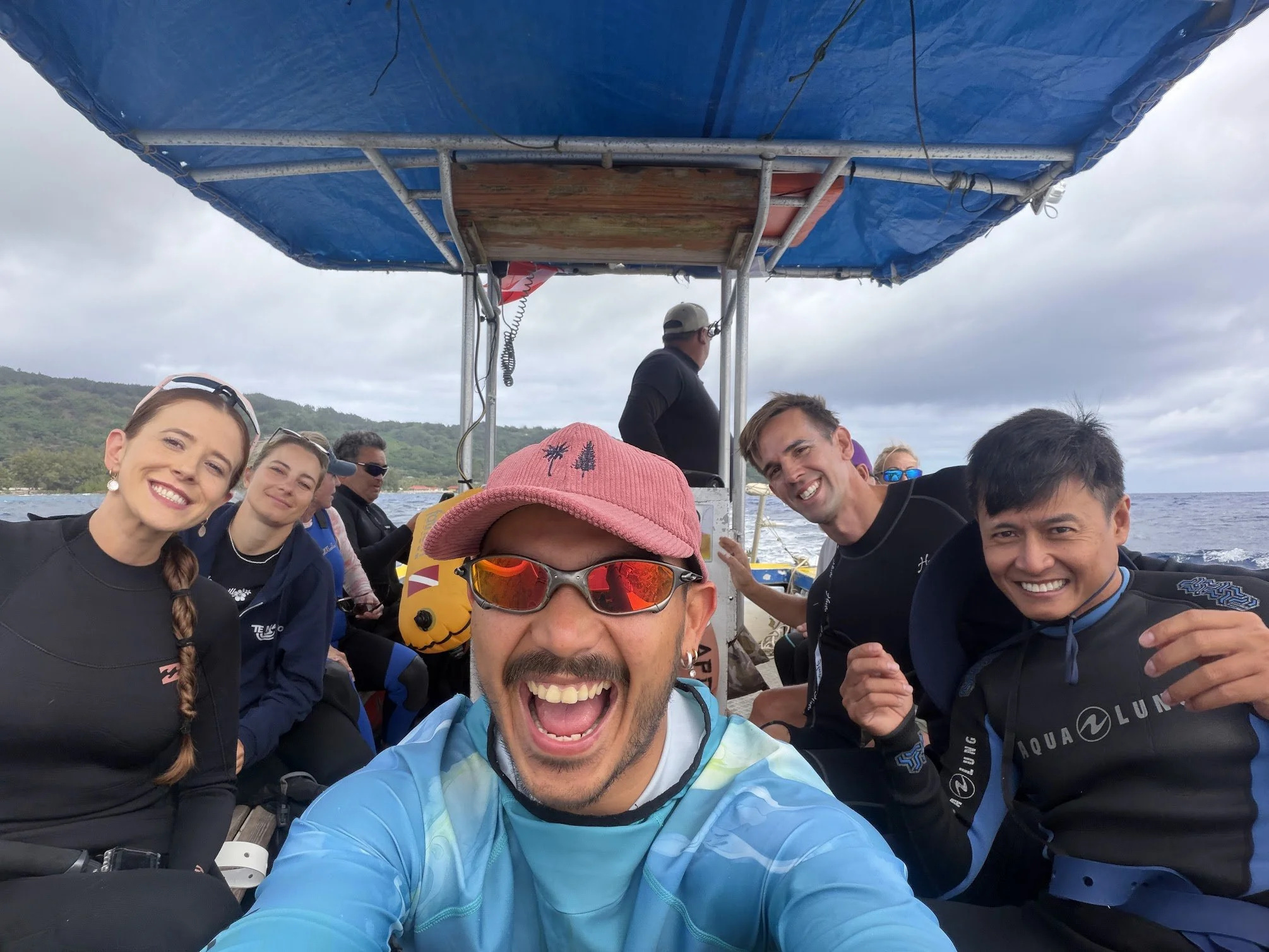
Six weeks in Rurutu: How the season unfolded
Week 1 | August 30 – September 6 — A quiet beginning
Our first week began with relatively few whales around the island. We managed to get into the water every day, recording 11 drops throughout the week, but most encounters involved singing males or whales passing through the area.
Listening to a humpback sing underwater is one of the most extraordinary experiences the ocean can offer. Their songs travel enormous distances, and when you're floating above a singing male, you can often feel the sound vibrating through your body. However, these animals generally remained deep or continued moving, offering limited opportunities for prolonged interactions.
Perhaps most noticeably, we didn't encounter any mothers with calves. By late August, we would normally expect at least some mother-calf pairs to have established themselves around Rurutu. Their absence was an early indication that this might not be a typical season.
Week 2 | September 6–13 — The Rurutu we know and love
Everything changed during our second week. Ocean conditions improved dramatically, with the swell dropping to approximately 1.3 metres, and suddenly the island seemed to come alive.
Over six days, our team encountered four different mother-and-calf pairs, along with singing males, a juvenile humpback, and a pair of adults. Guests entered the water every day, with sustained interactions recorded on four of the six days. Several encounters lasted more than two hours, giving our groups the opportunity to quietly observe the whales’ behaviour rather than simply watching them swim past.
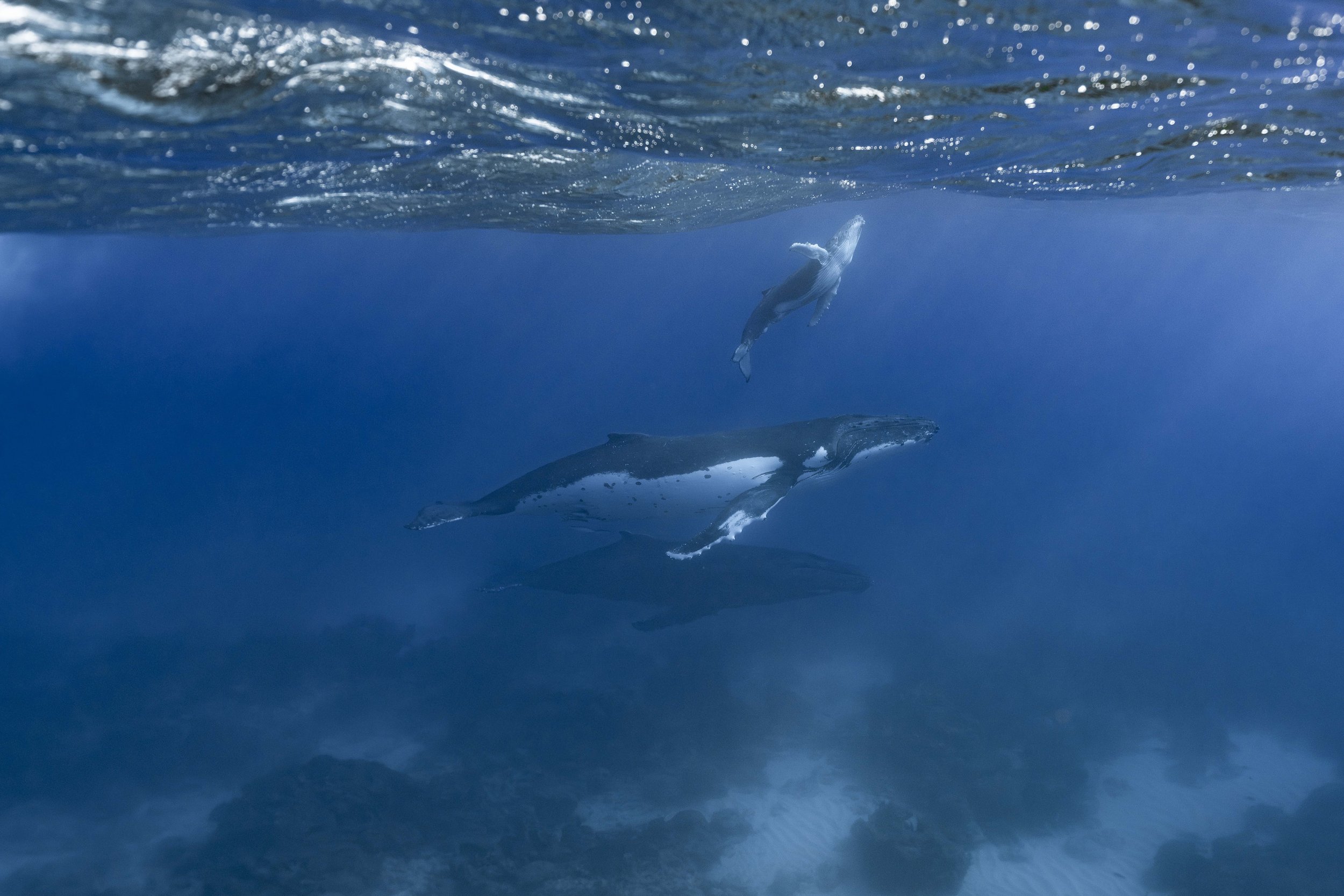
There's something profoundly different about being in the water with a mother and her calf when the animals are completely relaxed. Rather than chasing an encounter, you're simply sharing the same space, watching the calf explore its surroundings while its mother rests nearby.
For our expedition lead Sarah, who has experienced several seasons in Rurutu, this was her best week yet. It was a reminder of just how remarkable this island can be when conditions and whale behaviour come together.
Week 3 | September 13–20 — Following the whales
The third week brought a noticeable change. Our team repeatedly encountered a female humpback accompanied by an escort, with the pair observed on five of the six days. On Monday, guests spent approximately 90 minutes in the water during one encounter.
But unlike the relaxed mothers and calves of the previous week, these whales were consistently moving around the island. We could find them, and often enter the water, but they rarely remained in one place for long. Wednesday also marked our first day of the season without a whale sighting.
The ocean was becoming rougher, and the combination of fewer animals and less predictable behaviour made encounters increasingly challenging.
Week 4 | September 20–27 — Another exceptional week
Our fourth week delivered some of the most memorable encounters of the entire season. On Monday, guests spent approximately an hour and a half with a playful juvenile humpback, with three whales present in the surrounding area. Two days later, we encountered a new mother-and-calf pair that remained with our group for an extraordinary two and a half hours.
Throughout the week, we also observed singing males, breaching whales, and a pair of humpbacks holding position over the reef. Four of the six days produced sustained interactions.
What made this week particularly special was the variety of behaviours we observed. From curious juveniles to resting mothers and calves, these were the kinds of encounters that have drawn us back to Rurutu year after year. Alongside Week 2, it was unquestionably one of the highlights of 2026.
Week 5 | September 27 – October 4 — A quieter ocean
As September came to an end, whale activity declined considerably. The weather changed suddenly on Sunday, the new arrival day, bringing high winds and swell. During the first half of the week, our groups repeatedly encountered a singing male, including three separate drops over the reef on Tuesday.
Thursday brought a spectacular display of breaching from the boat, although conditions and the whales' behaviour didn't allow for an in-water encounter. By Friday and Saturday, we were unable to locate any whales. For the first time that season, a group finished its expedition with multiple days without whale encounters.
While disappointing, this is part of the reality of working with wild animals in an open-ocean environment. There are no guarantees that the whales will remain around the island, even during what would normally be considered the peak migration period.
Week 6 | October 4–11 — Weather takes over
Our final week was the most challenging of the season. Strong winds and large southern swells made operations difficult, with wave heights reaching approximately 4.1 metres on October 7. Monday and Tuesday produced no whale sightings, and Wednesday’s conditions were unsafe enough that we cancelled both boats.
Fortunately, we were able to rearrange the schedule and make up the cancelled session over the weekend. Conditions improved later in the week, allowing several more in-water encounters, including multiple passes by a particularly large male humpback.
Ultimately, guests entered the water on three of seven boat days. It wasn't the finish we had hoped for, but our team worked hard to adapt the schedule, take advantage of suitable weather windows, and ensure that all planned sessions were completed.
An unusually rough season in the Austral Islands
Whale numbers were only part of the challenge in 2026. The weather also played a significant role. Rurutu lies approximately 570 kilometres south of Tahiti, exposed to the powerful southern swells generated across the Southern Ocean.
Unlike some of the more sheltered whale-swimming destinations in French Polynesia, Rurutu can experience substantial ocean conditions throughout the migration season. This is something we always emphasize when preparing guests for our expeditions. However, 2026 was particularly challenging.
Using historical marine weather data from Open-Meteo, we compared the frequency of large swells during our expedition period with previous seasons. The results were striking.
| Swell, Aug 30 – Oct 11 window | 2026 | 2025 | 2023 |
|---|---|---|---|
| Days with max wave height ≥ 3 m | 20 | 12 | 14 |
| Mean daily max wave height | 2.7 m | 2.7 m | 2.8 m |
| Season peak | 4.1 m | 4.7 m | 4.8 m |
Source: Open-Meteo marine hindcast, 22.45°S 151.35°W, 43 days each year.
Source: Open-Meteo marine hindcast for approximately 22.45°S, 151.35°W, over comparable 43-day periods. These are modelled maximum wave heights, not a direct measurement of conditions at each boat location.
Nearly half of our 2026 season experienced maximum wave heights of three metres or more. Interestingly, average conditions weren’t dramatically worse than in previous years. The main difference was the frequency of significant swell events.
Week 2, when we experienced some of our best whale encounters, was also the calmest week of the season. That’s an important relationship, although it doesn’t necessarily mean calmer weather brings more whales.
Calm conditions make whales easier to spot, improve visibility, and allow boats and swimmers to approach more comfortably. They also create better opportunities for prolonged encounters when animals choose to remain in an area.
Despite the challenging conditions, we cancelled only one scheduled session during the entire season, which was subsequently made up. Several other sessions were rescheduled to take advantage of more favourable conditions.
For anyone considering Rurutu in the future, this is worth understanding: it is a genuine open-ocean expedition, and a reasonable level of swimming ability and comfort in changing sea conditions is essential.
Fewer whales, and different behaviour
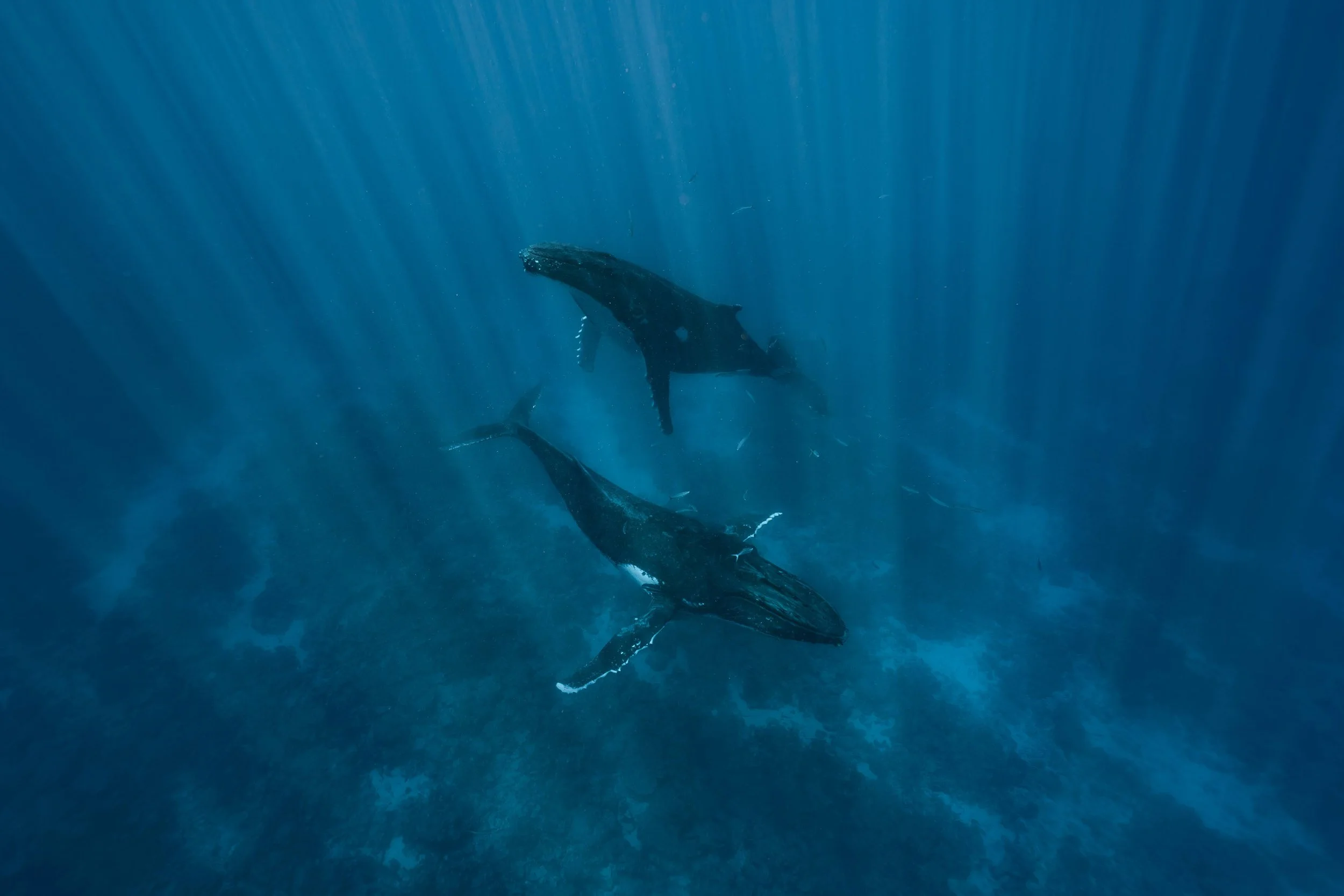
Perhaps the most interesting observation from 2026 wasn’t simply that we encountered fewer humpbacks. It was how differently many of those whales behaved.
Rurutu forms part of the breeding and calving habitat used by humpback whales belonging to the Oceania population. These animals spend the austral summer feeding in Antarctic waters before migrating north into the South Pacific, where they mate, give birth, and spend time with their young.
Over our previous seasons, we’ve become accustomed to finding mothers and calves resting in the sheltered waters around Rurutu. We’ve also experienced encounters with curious juveniles, adult pairs, and competitive groups of males pursuing females.
In 2026, the overall composition and behaviour of the whales we encountered seemed different. Mothers and calves were relatively scarce outside our two strongest weeks. We didn’t observe a single competitive group throughout the season. And many of the adult whales we encountered appeared to be travelling rather than settling around the island.
Several times, our guides located whales that initially seemed receptive to an encounter, only for the animals to continue moving or leave the area shortly afterwards. This was particularly noticeable with adult pairs.
While we still managed to enter the water on most days during the first four weeks, many encounters consisted of watching whales pass beneath or alongside us before disappearing into the blue.
It’s an important reminder that finding whales and having meaningful interactions with them are two very different things. Our approach has always been to allow the animals to dictate the encounter. If a whale chooses to remain, we can spend time observing it. If it chooses to leave, we let it go. That philosophy became especially important during a season when so many animals appeared less inclined to interact.
Was El Niño responsible for the unusual season?
One question we’ve been asking throughout 2026 is why whale numbers appeared unusually low across several parts of the South Pacific. It wasn’t just Rurutu.
Throughout the season, we remained in contact with friends, guides, and operators working in Tahiti, Moorea, and Niue. Their observations were remarkably similar. Whale numbers were lower than expected, mothers and calves appeared less frequently, and some areas experienced unusually quiet periods during what would normally be their busiest months.
One possible contributing factor is the strong El Niño event described in the source season research. That report attributes a central equatorial Pacific temperature anomaly of approximately +2.1°C to an October 2026 NOAA climate discussion. This specific figure and the underlying bulletin should be independently verified before publication.
El Niño can influence ocean ecosystems across enormous distances, including the Antarctic feeding grounds on which South Pacific humpback whales depend.
Changes in Antarctic feeding conditions
Humpback whales rely heavily on Antarctic krill to build the energy reserves needed for their long migrations. Changes in ocean temperatures, sea ice, and productivity can affect the distribution and availability of krill.
Research has linked environmental variability in the Southern Ocean with changes in humpback whale reproductive success. For female humpbacks, the amount of energy accumulated during the feeding season can influence their ability to sustain pregnancy, give birth, and nurse a calf. If feeding conditions are poor, fewer females may successfully reproduce in a given year.
Changes in migration and breeding behaviour
Environmental conditions can also influence when and where humpbacks migrate, how long they remain in breeding areas, and which habitats they use. Warmer ocean temperatures and changing circulation patterns may alter the distribution of whales across the South Pacific.
This could help explain why some destinations experience unusually low numbers during particular seasons, even when the broader population hasn’t necessarily declined.
What does this mean for Rurutu?
We want to be careful about drawing conclusions. Our observations come from a single season, and whale movements are influenced by many factors. We cannot say that El Niño caused the lower numbers we experienced in 2026.
However, the combination of fewer whales, relatively few calves, unusual behaviour, and similar reports from neighbouring islands raises interesting questions. It’s something we’ll continue watching closely in future seasons. And it’s one of the reasons we believe sharing detailed observations from our expeditions is valuable.
Eight years of humpback whales in Rurutu
Having worked in Rurutu since 2019, we’ve now experienced eight consecutive seasons alongside the Tavita family. While our historical observations aren’t a formal scientific population survey, they provide a useful perspective on just how much conditions can vary from one year to the next.
| Season | How it felt from the boat |
|---|---|
| 2019 | Very good. Not huge numbers, but playful, curious whales. |
| 2020 | The most whales we have ever seen here: 25 to 30 animals at once at the peak, staying into mid-November. |
| 2021 | The worst year. Whales left early and the back half of the season was empty. |
| 2022 | Solid. A normal, steady year. |
| 2023 | Exceptional. Numbers, calves and behaviour all at once. |
| 2024 | Solid in general, few misses. |
| 2025 | Mixed. A step down from 2024. |
| 2026 | Low count, little engagement, no real peak. Two very strong weeks and a thin finish. Slightly below 2025. |
One of our quieter seasons, with relatively low numbers and fewer sustained interactions, but two exceptional weeks.
Looking back over these eight years, one thing becomes obvious. There is no such thing as a guaranteed whale season.
In 2020, we experienced more humpbacks around Rurutu than we’d ever seen before, sometimes with dozens of animals present at once. Just one year later, the whales departed unusually early, leaving much of the latter part of the season exceptionally quiet. Then came 2023, which remains one of our favourite seasons for both whale numbers and the quality of interactions.
These fluctuations are part of working with migratory wildlife. They also make it difficult to predict exactly when the best encounters will happen. This year, for example, Weeks 2 and 4 were exceptional, while the weeks immediately before and after were considerably quieter.
The best we can do is continue collecting observations, learning from each season, and adapting our expeditions accordingly.
Beyond the whales: Life on Rurutu
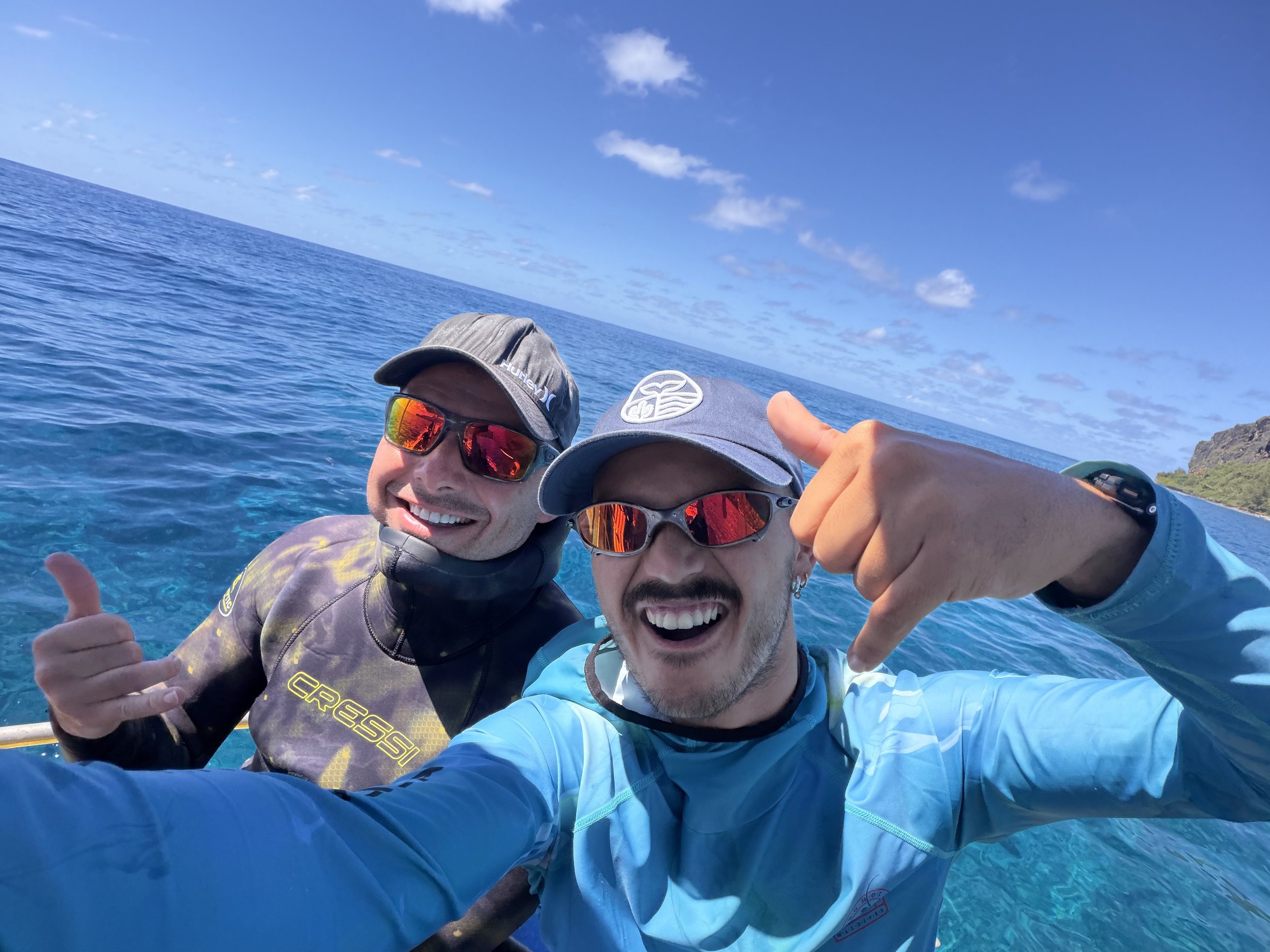
Although humpback whales are the reason we travel to Rurutu, they’re only part of what makes this island special. Rurutu remains one of the most culturally rich and welcoming places we’ve worked in French Polynesia.
For eight years, our expeditions have been organized in close partnership with the Tavita family, whose hospitality has become as much a part of the experience as the whales themselves. And in a season when the ocean didn’t always cooperate, that relationship became more important than ever.
Teiti and her team continued to prepare wonderful meals throughout the season, introducing guests to local ingredients and Polynesian cooking. Onoï and Hervé spent long days navigating the island’s waters, drawing on their local knowledge to locate whales even when sightings were scarce.
Meanwhile, Gisèle and the rest of the family welcomed our groups into the island’s history, traditions, and everyday life. One of the highlights for many guests was our island tour, during which Gisèle shared stories about Rurutu’s history and culture. When she became unwell later in the season, Edwige stepped in, with Elias helping translate.
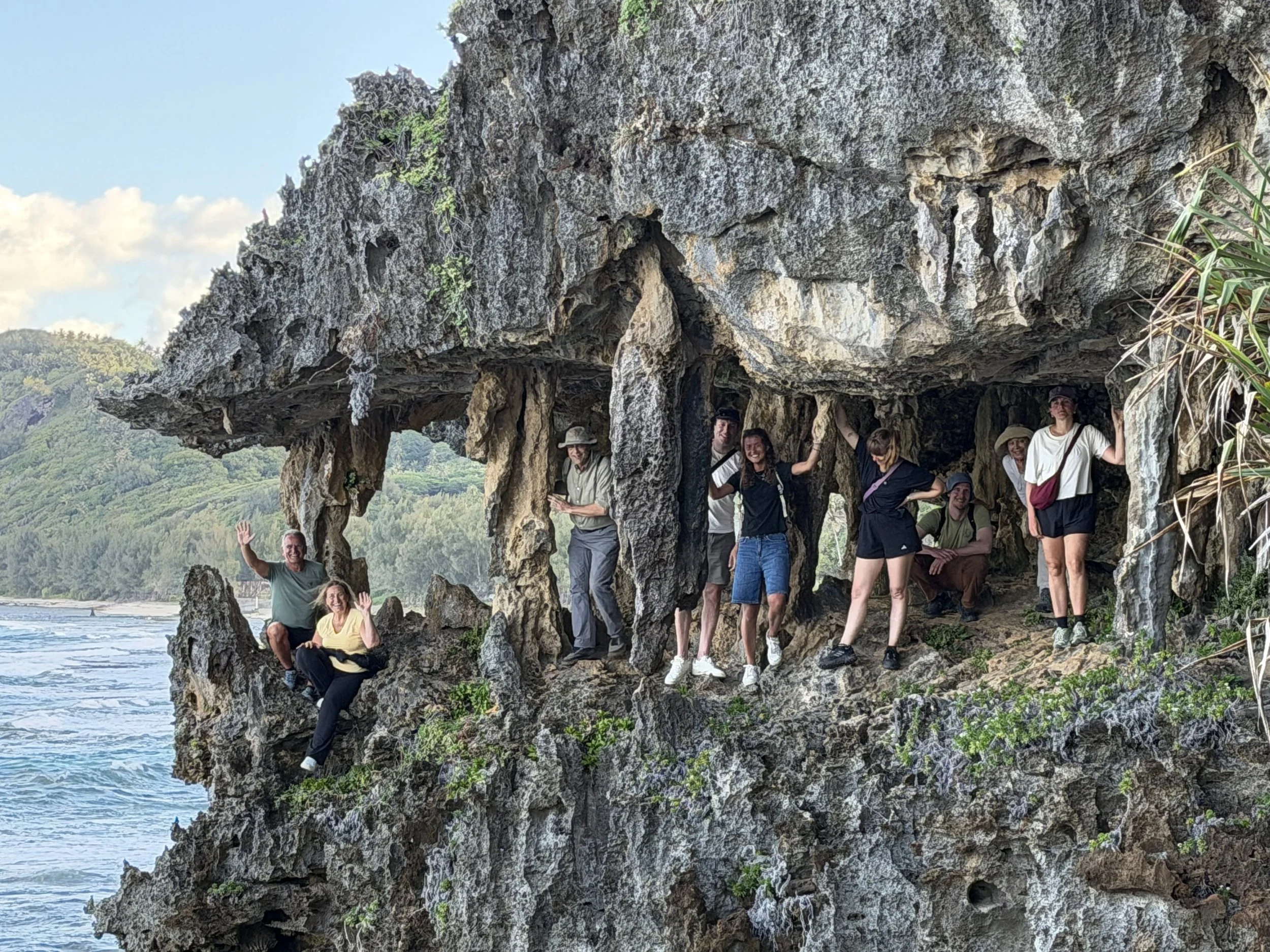
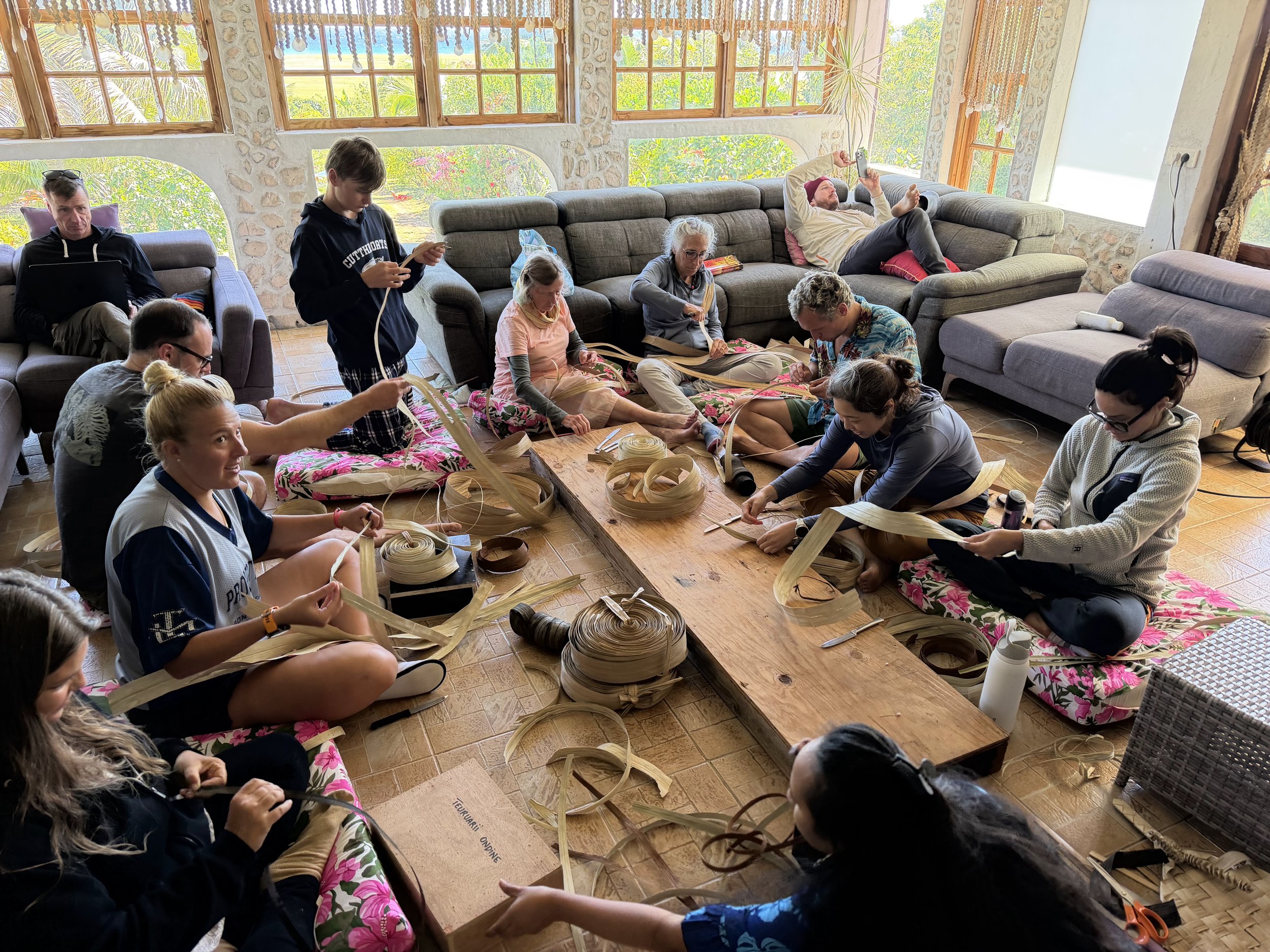
We also introduced several additional cultural activities this year. A traditional weaving workshop led by Ondine, a young local artisan, became an unexpected highlight. Guests also explored the island’s landscapes on hikes to Manureva and Dragon’s Head, attended presentations about humpback whales, and spent evenings sharing meals, watching documentaries, and getting to know one another.
These experiences weren’t simply substitutes for time on the water. They’re part of what we want our expeditions to represent: an opportunity to experience a place, its wildlife, and the people who call it home.
Our expedition leads Elias, Sarah, and Chris deserve particular recognition this year. Keeping spirits high during a difficult whale season isn’t always easy, especially when guests have travelled halfway around the world hoping for extraordinary encounters.
Their patience, professionalism, and commitment to both the guests and the whales made an enormous difference. We were particularly grateful for the feedback we received from guests who recognized that commitment, even during weeks when whale activity was limited.
Responsible whale encounters matter more than ever
Another challenge this year was the growing number of boats operating around Rurutu. The island now has seven whale-swimming boats, compared with five in previous seasons.
When whale numbers are high, the activity can be spread across different areas. But when relatively few whales are present, multiple boats can end up searching for or approaching the same animals. This creates additional pressure on the whales and makes responsible decision-making particularly important.
Throughout the season, our guides prioritized the animals’ behaviour and comfort when deciding whether to enter the water. When whales appeared uncomfortable or chose to move away, we respected that decision. When an animal was already attracting too much attention from other boats, we sometimes chose to continue searching rather than add to the pressure.
We also maintained communication with other local operators, sharing information about sightings and coordinating our activities when possible. For us, responsible whale swimming isn’t simply about following regulations. It’s about recognizing that the animals have a choice in every encounter. And ultimately, the most memorable interactions are often those where a whale makes the decision to remain with us.
Looking ahead to Rurutu 2027
We’re already looking forward to returning to Rurutu next year. We’ll continue working with the Tavita family and our local captains, maintaining the small-group approach that has defined our expeditions since the beginning.
We’re also making a few improvements based on what we learned this season. One priority is more consistent data collection. Beginning in 2027, our expedition leads will use a standardized daily reporting system to record not only whether whales were encountered, but also the nature and duration of each interaction.
This will help us better understand how whale behaviour changes throughout the season and provide future guests with an even clearer picture of what to expect.
We’re also continuing to develop the cultural and land-based components of our program. Rurutu has so much to offer beyond the water, and we want guests to experience more of the island’s landscapes, traditions, and community.
Finally, we’ll continue keeping our groups small, with a maximum of six or eight guests depending on the expedition. Smaller groups allow us to operate more flexibly, provide a more personal experience, and minimize our impact on the whales.
What should you expect if you’re considering Rurutu?
If there’s one lesson from eight years of expeditions in Rurutu, it’s that every season is different. Some years, the island delivers extraordinary whale activity almost daily. Other years require more patience. And sometimes, as we experienced in 2026, both extremes can occur within the same month.
We believe Rurutu remains one of the most remarkable places in the South Pacific to encounter humpback whales in their natural environment. But it’s important to arrive with realistic expectations. These are wild animals, the ocean can be challenging, and no two encounters are ever the same.
What we can offer is an experienced team, knowledgeable local captains, small groups, and a genuine commitment to creating the best possible experience while respecting the whales and their environment.
And when everything comes together, there are few experiences quite like floating in the blue waters of Rurutu alongside a humpback whale and her calf.
Thank you, Rurutu
To everyone who joined us this season, thank you for your patience, enthusiasm, and understanding during a year that wasn’t always easy.
And to the Tavita family, our captains, guides, and everyone on the island who welcomed us so warmly, māuruuru roa.
We’re grateful to have spent another season in this extraordinary corner of French Polynesia, and we’re looking forward to seeing what 2027 brings.
Interested in joining us next season? Explore our upcoming Rurutu humpback whale expeditions and join us in the Austral Islands in 2027.